
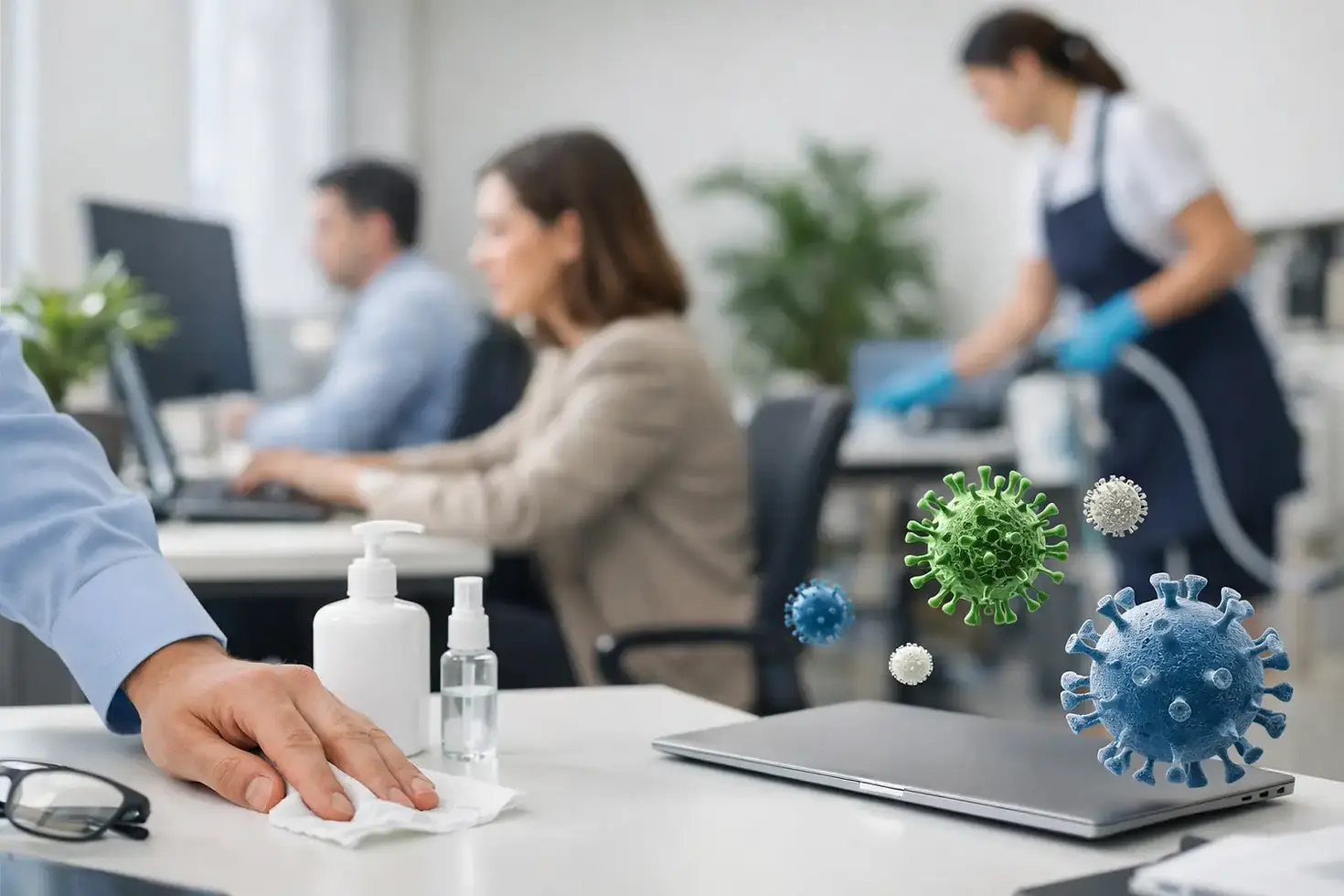
How to Reduce Office Germs Without Disruption

The shared microwave handle, conference room table, breakroom faucet, and front-desk counter can all collect more than fingerprints during a busy workweek. Knowing how to reduce office germs starts with recognizing that a clean-looking office is not always a clean office. The goal is not to make employees anxious about every surface. It is to build sensible habits and a dependable cleaning routine that supports a healthier, more comfortable workplace.
For small offices, consistency matters more than occasional deep-cleaning efforts. A few practical decisions about high-touch surfaces, supplies, air flow, and employee expectations can reduce the spread of everyday germs without interrupting work.
How to Reduce Office Germs With a Smart Routine
Office germs spread most easily where people, hands, food, and shared equipment meet. That makes common areas the right place to focus first. Rather than treating every surface the same way, prioritize the places employees and visitors touch repeatedly throughout the day.
High-touch points usually include door handles, light switches, elevator buttons, shared keyboards and mice, copier controls, refrigerator handles, coffee makers, faucets, toilet flush handles, conference room remotes, and reception counters. These surfaces benefit from regular cleaning and, when appropriate, disinfection.
Cleaning and disinfecting are related but different tasks. Cleaning removes dust, spills, oils, and visible soil. Disinfecting uses a product designed to kill or deactivate certain germs on a surface. A disinfectant often works best after the surface has been cleaned, because dirt and residue can prevent full contact with the product.
The right frequency depends on your office size, visitor volume, shared workstations, and the type of work being performed. A quiet office with assigned desks may need one schedule, while a medical-adjacent business, customer-facing reception area, or hybrid workplace with desk sharing may need more attention during the day.
Build daily habits around shared spaces
The simplest way to lower germ transfer is to make hand hygiene easy. Keep hand soap, paper towels, and hand sanitizer stocked in restrooms, breakrooms, and areas where visitors enter. Empty dispensers send the wrong message and make good habits harder to follow.
Employees should be encouraged to wash their hands before eating, after using the restroom, after coughing or sneezing, and after handling shared items. Friendly, clear reminders near sinks and break areas can help without making the office feel overly restrictive.
Shared food spaces deserve special attention. Wipe spills promptly, clean tables after meals, and ask employees to label and remove food from the refrigerator regularly. Forgotten lunches and sticky countertop residue can create odors, attract pests, and make a breakroom harder to maintain.
Focus on the Surfaces That Matter Most
A productive germ-control plan does not mean spraying every desk at random. It means using the proper product on the proper surface and allowing enough contact time to work. Always follow the product label, especially for dwell time, dilution instructions, ventilation needs, and compatibility with electronics.
For example, a keyboard should never be saturated with liquid. Use a suitable wipe or lightly dampened microfiber cloth, following the device manufacturer’s care guidance. For hard, nonporous surfaces such as counters and door handles, a trained cleaning team can use a structured approach that removes grime first and disinfects targeted touchpoints afterward.
Microfiber cloths are a practical choice because they lift and hold soil effectively when used correctly. They should be changed between areas and laundered after use. Reusing the same cloth from a restroom in a breakroom or reception area can spread contamination instead of controlling it.
Restrooms require their own supplies, tools, and sequence of work. Cleaning teams should generally move from cleaner areas to dirtier areas and from higher surfaces to lower surfaces. This reduces the chance that soil and germs are transferred back onto freshly cleaned touchpoints.
Do not overlook desks and personal devices
Employees have an important role in reducing office germs at their individual work areas. Personal phones, desk phones, keyboards, headsets, reusable water bottles, and computer mice are touched constantly but can be missed during routine cleaning.
A simple end-of-day reset is often enough: clear food and used drink containers, wipe the desk with an appropriate cleaner, and sanitize hands after handling shared equipment. If employees share desks, provide disinfecting wipes and establish a quick wipe-down expectation before and after each use.
This approach works best when it is supportive rather than punitive. People are more likely to participate when supplies are easy to reach and the expectations are practical.
Improve Air Quality and Illness Etiquette
Surface cleaning is only one part of a healthier office. Good ventilation can help reduce stale air and improve overall comfort, particularly in enclosed conference rooms and busy shared areas. When the building allows it, use outdoor air ventilation, maintain HVAC filters on schedule, and avoid blocking vents with furniture or storage.
Portable air cleaners may be useful in smaller rooms with limited airflow, but they are not a substitute for cleaning, hand hygiene, or asking sick employees to stay home. The best choice depends on the room size, filter type, occupancy, and existing ventilation system.
A clear illness policy also protects the team. Employees should feel supported when they need to work from home or take sick time. Encouraging people to stay home when they have a fever, vomiting, diarrhea, or symptoms that could be contagious is a practical way to reduce workplace exposure.
Managers set the tone here. When leaders model good hand hygiene, clean up after themselves, and respect sick-time policies, employees are more likely to do the same.
Give Cleaning Responsibilities a Clear Owner
Many offices struggle not because no one cares, but because no one knows who is responsible for what. Employees may assume the cleaning crew handles every daily mess, while the cleaning crew may arrive only after business hours. Clear boundaries prevent missed tasks.
Employees can be responsible for their personal desks, food storage, and immediate spills. Office managers can monitor supplies, coordinate maintenance, and address recurring trouble spots. A professional commercial cleaning provider can handle scheduled cleaning, restroom sanitation, floors, trash removal, detailed dusting, and targeted disinfection of shared surfaces.
A written checklist is especially useful for offices with multiple shifts or shared spaces. It should identify what happens daily, weekly, and periodically. The checklist should be reviewed after changes in staffing, office layout, seasonal illness trends, or business traffic.
Avoid relying on strong scents as proof that an area is clean. Fragrance can mask odors, but it does not necessarily remove soil or reduce germs. Many offices prefer eco-conscious products that are effective, used responsibly, and better suited to people who are sensitive to harsh chemical smells.
When Professional Office Cleaning Makes Sense
Routine professional cleaning helps keep standards steady when internal teams are busy serving customers and running the business. It is particularly valuable for offices with frequent visitors, shared restrooms, breakrooms, common workstations, or staff who do not have time to manage cleaning tasks during the day.
A trained cleaning team can create a schedule around your hours, address high-touch areas consistently, and use commercial methods that protect surfaces while delivering visible results. For San Jose-area small businesses, DNAS Cleaning Service LLC provides dependable commercial cleaning support with trained staff, eco-friendly product options, and service plans tailored to the workplace.
The best cleaning schedule is not always the most frequent one. A small office with low traffic may benefit from weekly service paired with daily employee habits. A larger or customer-facing workplace may need several visits each week or additional attention to restrooms and entry areas. The right plan should reflect how your team actually uses the space.
A healthier office is built through everyday care, not one dramatic cleaning day. Keep the essentials stocked, focus on the surfaces people share, and choose a cleaning routine your team can maintain with confidence.


Comments